
Welcome to our Ayurvedic Herbal Spotlight! Each month, we delve into seasonal herbs that can assist you in maintaining balance. We explore their medicinal actions, how they make you feel, their warming or cooling nature, and which doshas they benefit. Let’s enhance our well-being naturally!
Gotu Kola (Centella asiatica)
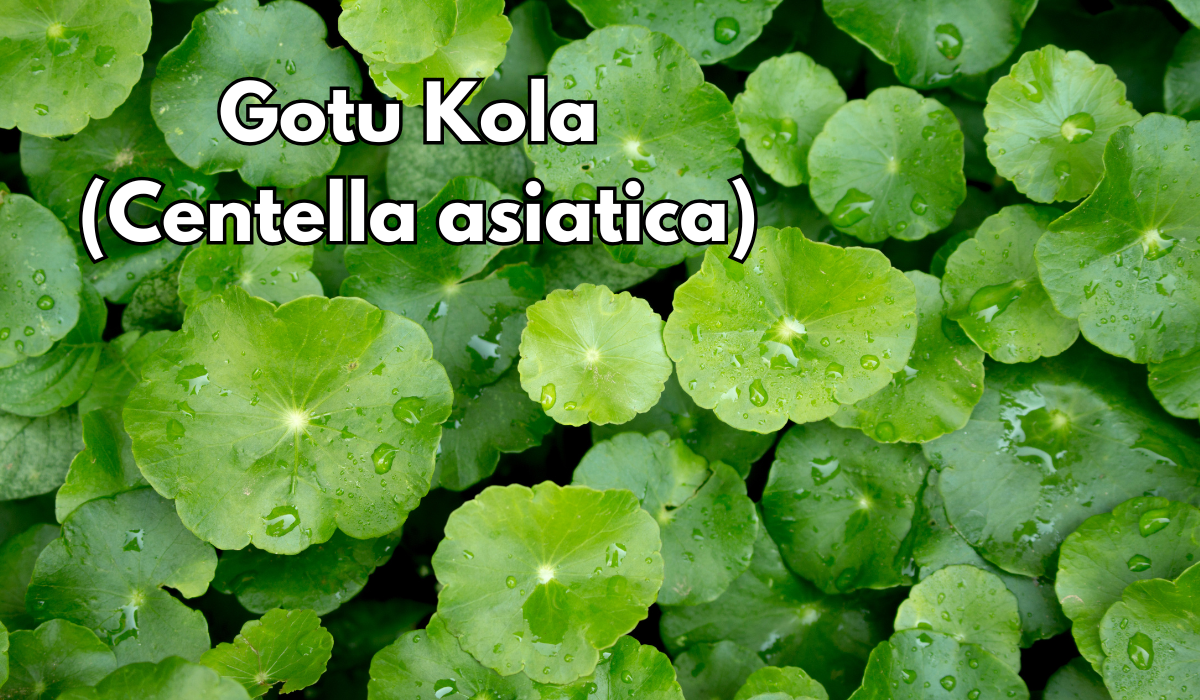
Known in Sanskrit as Mandukaparni — “frog-leaf,” a nod to the shape of its small, fan-like leaves — Gotu Kola has been treasured in Ayurveda for millennia as a premier rejuvenative for the mind, skin, and connective tissue. A creeping perennial that spreads along riverbanks and marshy ground throughout South and Southeast Asia, Centella asiatica is often called the “herb of longevity,” celebrated in legend for helping practitioners maintain mental clarity and vitality well into old age.
Gotu Kola nourishes the nervous tissue (majja dhatu) and the skin (twak dhatu), acting as both a rejuvenator for the mind and a vulnerary that speeds tissue repair. Beyond cognition, it strengthens connective tissue, supports healthy circulation, and gently unwinds tension held in the body. It is equally beloved by students, elders seeking cognitive support, and anyone recovering from injury, burnout, or skin irritation.
Note: Centella asiatica is sometimes called “Brahmi” in South Indian traditions, which can cause confusion with Bacopa monnieri (the “Brahmi” of North Indian tradition). Though their actions overlap, they are botanically distinct herbs.
Medicinal Properties
Medicinal Actions: Nootropic · Rasayana (rejuvenative) · Adaptogen · Nervine tonic · Vulnerary (wound-healing) · Anti-inflammatory · Antioxidant · Circulatory tonic · Mild diuretic · Anxiolytic · Alterative · Diuretic
Nature: Cool, light, bitter, astringent, and slightly sweet.
How It Makes You Feel: Settled, clear, and unhurried. Gotu Kola eases tension while supporting steady, patient thinking. (with consistent use)
Recommended For: Beneficial for all three doshas (tridoshic), especially Pitta and Vata; Kapha types should favor smaller, well-spiced doses to avoid excess coolness dampening digestion.
Gotu Kola’s Key Medicinal Actions
Nootropic & Medhya Rasayana (intellect rejuvenator) Traditionally used to support memory, mental stamina, and calm concentration
Rasayana & Tissue Rejuvenator Supports the body’s connective tissue and skin; Traditionally used to promote healthy wound healing, scar tissue formation, and skin elasticity.
Vulnerary & Circulatory Support Applied topically or taken internally, Gotu Kola is traditionally associated with supporting healthy circulation, particularly in the lower limbs, and is used to support the strength and integrity of blood vessel walls.
Anxiolytic & Nervine Tonic Calms a restless or overstimulated nervous system without heaviness or sedation. Traditionally used for nervous exhaustion, mental overwhelm, and difficulty settling the mind (builds gradually with regular use over several weeks)
Cooling & Anti-Inflammatory Its cooling energy pacifies Pitta-driven heat and irritation, both mentally and in the skin. Traditionally applied to inflamed, irritated, or heat-aggravated skin conditions, and used internally to ease a hot, agitated mind.
Antioxidant & Skin-Nourishing (Varnya) Rich in antioxidant compounds, Gotu Kola is used both internally and topically to support skin health and radiance
How Gotu Kola Affects the Doshas
Vata — PACIFIES VATA
Gotu Kola’s grounding, nourishing quality soothes Vata’s tendency toward nervous depletion, anxiety, and dry or fragile tissue. It supports steadiness in both body and mind.
Recommendation: Helpful for nervous exhaustion, dry skin, joint or connective tissue weakness, and a scattered, anxious mind. Best taken with warm ghee or milk to counter Vata’s dryness.
Pitta — STRONGLY REDUCES PITTA
Gotu Kola’s cool, bitter nature is deeply Pitta-pacifying. It calms an overheated, overdriven mind and soothes inflamed or irritated skin and tissue.
Recommendation: Ideal for mental burnout, irritability, inflammatory skin conditions, and any pattern involving excess heat in the body or mind. One of the most valuable herbs for hard-driving, overheated Pitta types.
Kapha — USE WITH MODERATION
Gotu Kola’s cool, moist quality can dampen Kapha’s digestive fire and add to a sense of heaviness or dullness if overused.
Recommendation: Use in smaller doses and pair with warming, stimulating herbs such as ginger, black pepper, or trikatu. Best taken earlier in the day rather than in the evening.
How to Use Gotu Kola
- As a powder (Churna): ¼–½ tsp mixed into warm water, honey, or ghee. Taken in the morning for mental clarity, or in smaller amounts throughout the day for sustained support.
- As a supplement (Capsule): 300–600mg of standardized extract daily, typically for a minimum of 8–12 weeks. Effects build gradually — consistency matters more than dose size.
- As an oil (Gotu Kola Taila): Applied topically to the scalp, skin, or scars, Gotu Kola oil is traditionally used to support tissue repair, ease tension, and nourish the skin. Can be gently warmed before application.
- As a fresh leaf or tea: In parts of South and Southeast Asia, fresh leaves are eaten in salads or brewed as a daily tonic tea for longevity and mental clarity.
PRECAUTIONS: Not recommended during pregnancy or breastfeeding without practitioner guidance. May interact with sedatives, diabetes medications, and cholesterol-lowering drugs. Prolonged high-dose use has been associated with liver stress in some cases — avoid with existing liver conditions and consult a healthcare provider before extended use. Some individuals report increased sun sensitivity. Introduce slowly and observe how your system responds before increasing dosage.
Sources
Brinckmann, Josef & Engels, Gayle. HerbalGram, The Journal of the American Botanical Council. 2011. pg. 1-5. https://www.herbalgram.org/resources/herbalgram/issues/90/table-of-contents/herbalgram-90-herb-profile-gotu-kola/
Frawley, David & Lad, Vasant. The Yoga of Herbs. 2001, pg. 170-171.
https://www.herbalreality.com/herb/gotu-kola/
07/28/2026