
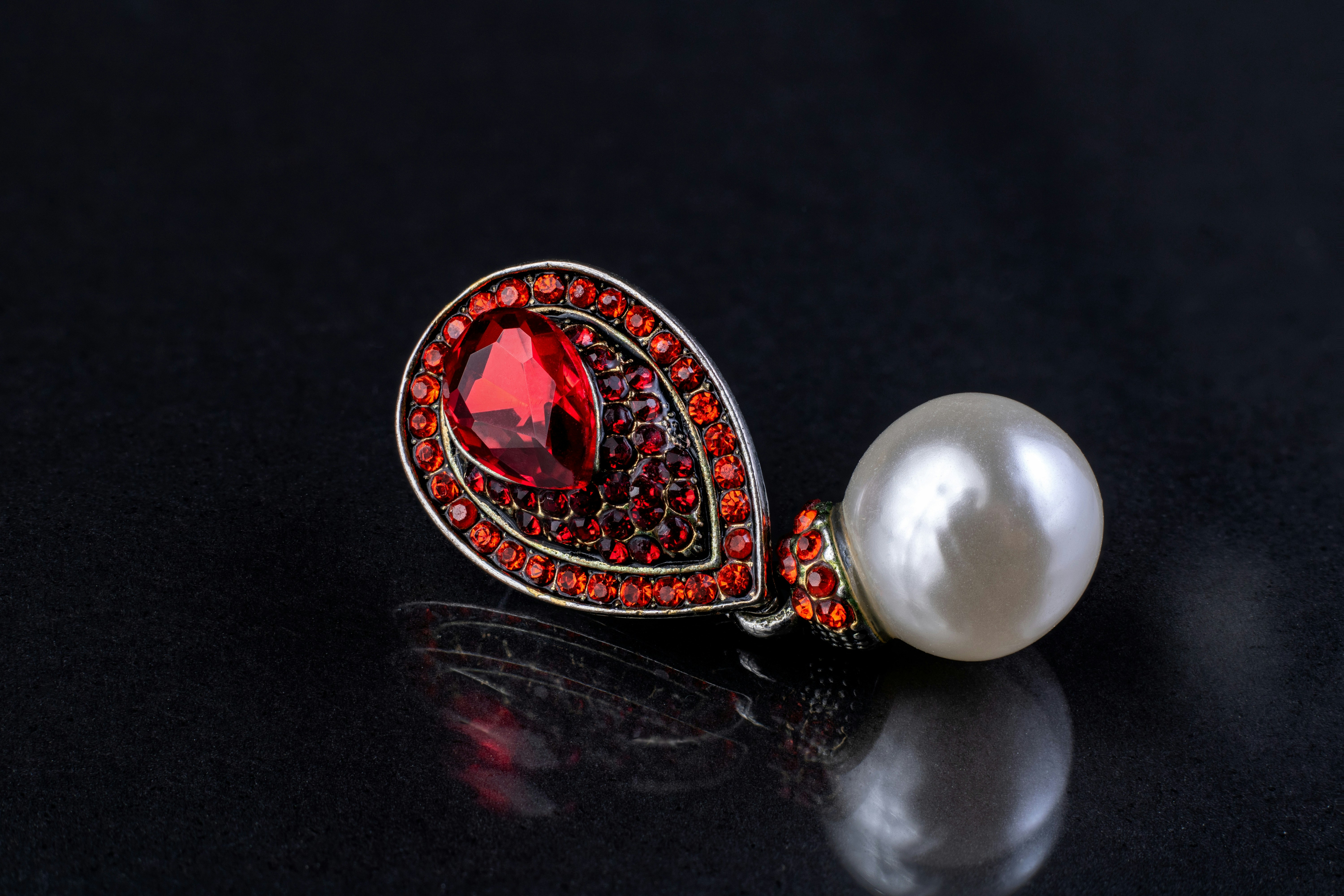
For thousands of years, Ayurveda has looked beyond herbs and diet to the mineral kingdom for healing support. Known as Ratna Chikitsa, or gemstone therapy, this practice is based on crystals and gems that carry subtle vibrational energies capable of influencing the body’s doshas, balancing the mind, and harmonizing a person with planetary forces. Whether you’re gem-curious or already have a favorite crystal on your nightstand, let’s dive into how Ayurveda understands these shimmering allies.
The Elements & Vibrational Energy
In Ayurvedic thought, everything in the universe, including gemstones, is composed of the five elements (panchamahabhuta): earth, water, fire, air, and ether. Each gem is believed to hold a unique elemental composition and frequency, formed under the earth over long periods of pressure and time.
When worn on the body or used in specific rituals, a gem’s vibration is thought to interact with the body’s own energetic field, subtly encouraging balance in the doshas — Vata, Pitta, and Kapha — the three constitutional energies that govern our physical and mental function.
Ratna Chikitsa isn’t considered a replacement for medical treatment, but rather a complementary layer of support, similar to how aromatherapy or sound healing is used alongside other wellness practices today.
Doshas and Their Gem Affinities
Each dosha is associated with particular qualities, and gemstones are chosen to either pacify excess or support deficiency:
- Vata (air + ether — movement, creativity, but prone to anxiety and dryness when imbalanced) responds well to grounding, warming stones like yellow sapphire, garnet, and amber.
- Pitta (fire + water — intensity, digestion, transformation, but prone to irritability and inflammation when imbalanced) is soothed by cooling stones such as pearl, moonstone, and emerald.
- Kapha (earth + water — stability, strength, but prone to heaviness and stagnation when imbalanced) benefits from stimulating, lighter-energy stones like ruby, red coral, and yellow topaz.
The Navaratna: Nine Gems and Their Planets
Central to Ayurvedic gem therapy is the Navaratna, or “nine gems,” each linked to one of the nine celestial bodies (Navagraha) in Vedic astrology. Practitioners often recommend a gem based on a person’s birth chart to strengthen a favorable planet or soften a challenging one.
| Gem | Planet | Traditional Association |
| Ruby (Manikya) | Sun (Surya) | Vitality, leadership, confidence |
| Pearl (Moti) | Moon (Chandra) | Emotional calm, intuition, cooling |
| Red Coral (Moonga) | Mars (Mangal) | Courage, strength, circulation |
| Emerald (Panna) | Mercury (Budh) | Intellect, communication, clarity |
| Yellow Sapphire (Pukhraj) | Jupiter (Guru) | Wisdom, prosperity, spiritual growth |
| Diamond (Heera) | Venus (Shukra) | Love, beauty, harmony |
| Blue Sapphire (Neelam) | Saturn (Shani) | Discipline, focus, karmic balance |
| Hessonite (Gomed) | Rahu | Clarity amid confusion, protection |
| Cat’s Eye (Lehsunia) | Ketu | Intuition, detachment, spiritual insight |
A Vedic astrologer typically studies a birth chart before recommending a specific stone, since wearing the “wrong” gem for one’s chart is thought to amplify imbalance rather than resolve it.
Also, the gem itself must be of a high quality, typically over two carats, in order to have an effect on the body.
How Gemstones Are Traditionally Used
– Set in jewelry, worn on specific fingers. This is the most common method. Each finger is linked to a planet — for example, the ring finger corresponds to the Sun, and gems are often set in gold, silver, or copper depending on the planetary energy being invoked. The metal itself is chosen carefully, as it’s believed to either amplify or conduct the gem’s energy.
– Gem elixirs and water infusions. Some practitioners place a cleansed gemstone in water overnight (without direct skin contact issues from certain minerals) to create a subtly “energized” water believed to carry the stone’s vibrational imprint. This is a spiritual practice, and stones with any toxicity risk are never used this way.
– Meditation and energy work. Holding or gazing at a gemstone during meditation is thought to help focus intention and align the mind with the stone’s qualities — cooling stones for calming Pitta-driven anger, grounding stones for scattered Vata energy.
– Placement in the home or under the pillow. Certain stones, like amethyst or rose quartz, are placed in living spaces or bedrooms to gently influence the surrounding energy, particularly for sleep and emotional balance.
– Chakra alignment. Beyond dosha and planetary work, many practitioners pair specific gems with the body’s seven chakras — amethyst for the crown, emerald for the heart, citrine for the solar plexus — layering this system atop traditional Ayurvedic use.
Conclusion
Gemstone therapy is a beautiful, ancient tradition rooted in symbolism, astrology, and energetic philosophy rather than clinical science. If you’re drawn to it, consider approaching it the way many do — as a mindful, intentional ritual that deepens self-awareness rather than a medical treatment. For any health concern, it’s always best paired with guidance from a qualified healthcare provider alongside a knowledgeable Ayurvedic or Vedic astrology practitioner.
Whether it’s the cool clarity of a pearl or the fiery glow of a ruby, there’s something undeniably grounding about holding a piece of ancient earth in your hand — a small, tangible reminder to pause and breathe.
08/04/2026